
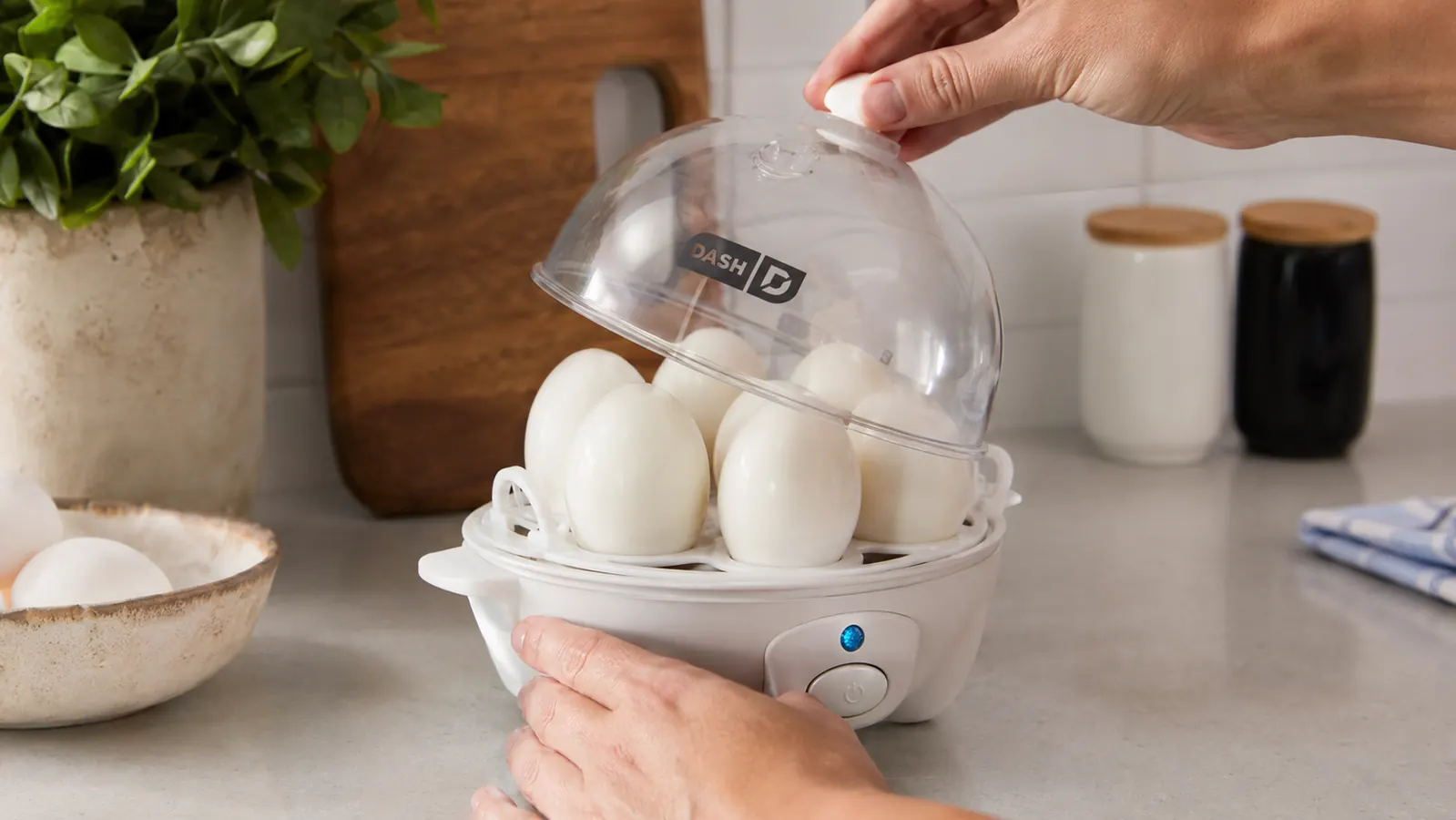
My kitchen has four feet of usable counter space. I have a two-burner stove, a dorm-size fridge, and a cabinet situation that I prefer not to talk about. Every appliance that earns a spot on those four feet has to pull serious weight, because anything that sits there and underperforms goes into the donation bin. The Dash Rapid Egg Cooker has been on that counter every single morning for six months. It has not gone anywhere near the donation bin.
I bought the Dash because I kept overcooking eggs on my electric coil burner and because boiling water for eggs meant one of my two burners was unavailable for anything else. At a budget price point, I figured the risk was low enough to try. What I did not expect was that it would become as automatic to my morning routine as making coffee. I have now run this thing through somewhere north of 180 cycles, and I have a pretty clear picture of what it does well, where it falls short, and who it is genuinely right for.
The Quick Verdict
For small-space cooks who eat eggs regularly, the Dash Rapid Egg Cooker is one of the most reliable single-task appliances you can own. Consistent results, minimal footprint, and a low enough price that if it dies in two years you will not regret the purchase.
Amazon Check Today's Price →If you eat eggs most mornings and your stove burners are always juggling too much, this is the fix.
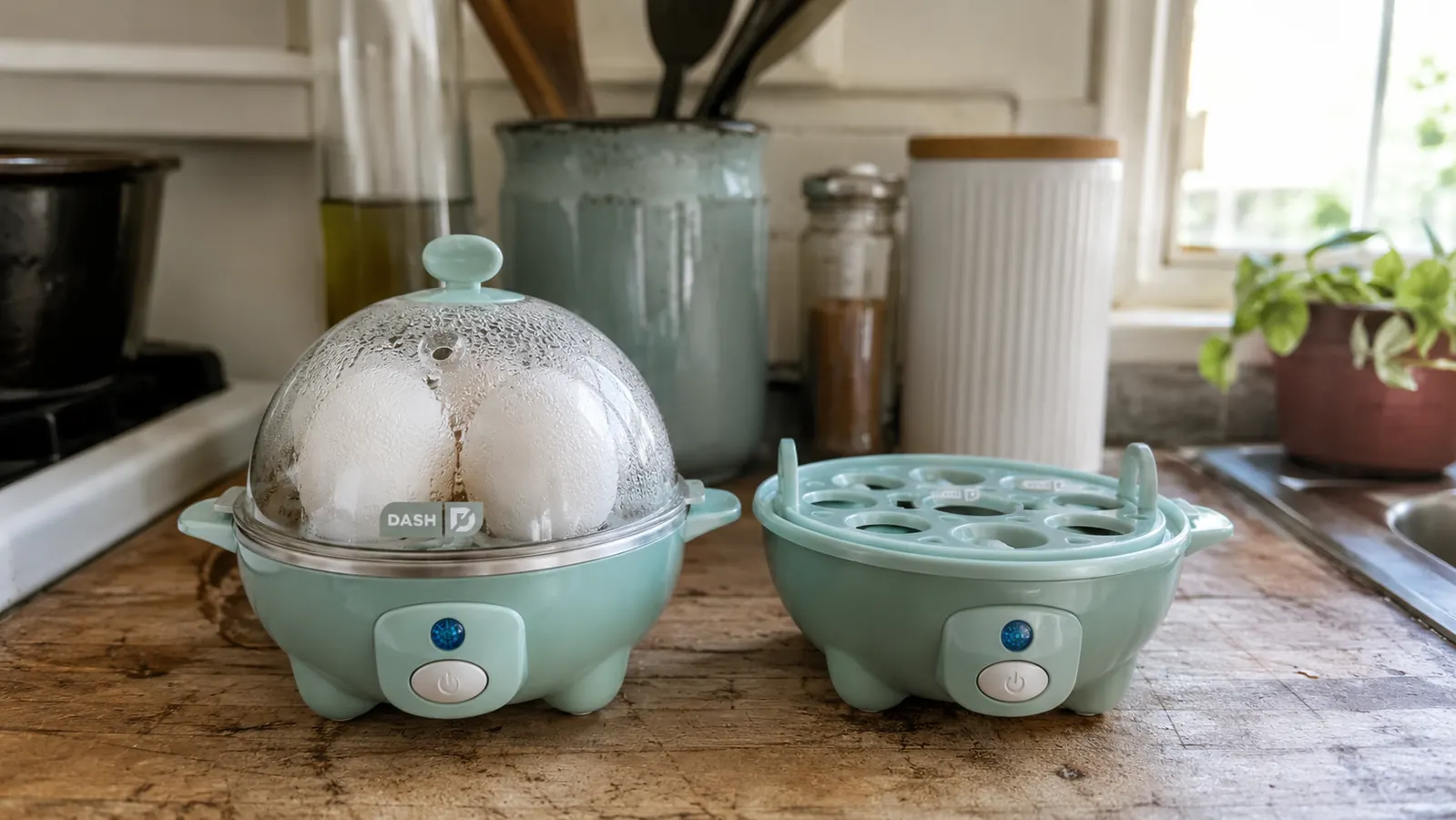
The Dash Rapid Egg Cooker handles up to six hard-boiled, poached, or steamed eggs hands-free and shuts itself off automatically. It takes up about as much space as a large coffee mug.
Amazon Check Today's Price on Amazon →How I Have Used It Over Six Months
My routine is pretty simple. Four to five mornings a week I make hard-boiled eggs for either breakfast or grab-and-go snacks. Once a week or so I do a batch of six for meal prep. I have done poached eggs maybe a dozen times, and soft-boiled a handful of times when I wanted them for ramen. So this is not a review built on a single test weekend. It reflects actual, repetitive daily use in a galley kitchen where everything has to be practical.
The workflow is fast enough that I do not think about it anymore. Add water using the measuring cup to the appropriate fill line (the cup has markings for soft, medium, and hard, plus a poach line), pierce the eggs with the included pin to prevent cracking, set them in the tray, put the dome on, and press the button. Done. The unit whistles and shuts off when the water has evaporated. Average time for four hard-boiled eggs is right around 12 minutes. I have not babied it or been particularly careful with it. I load it up while still half asleep and it handles itself.
The size deserves a mention because it matters when counter space is limited. The footprint is roughly that of a large coffee mug. It is about six inches across and ten inches tall with the dome on. It weighs a pound and a half. If you need to move it to get to something behind it, you pick it up with one hand. This is not a trivial thing when your counters are small.
Consistency Test: What Six Months of Hard-Boiled Eggs Actually Showed Me
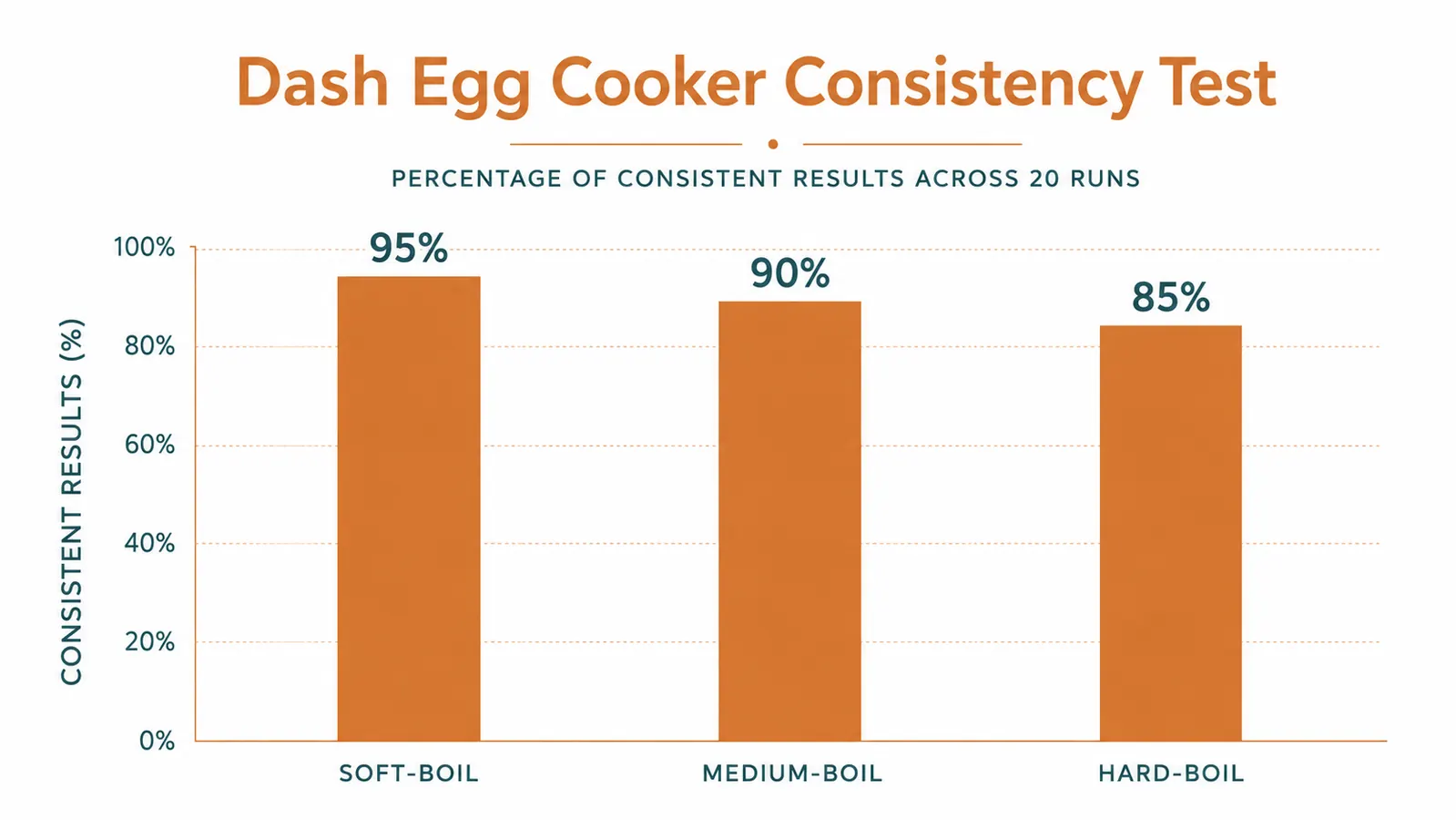
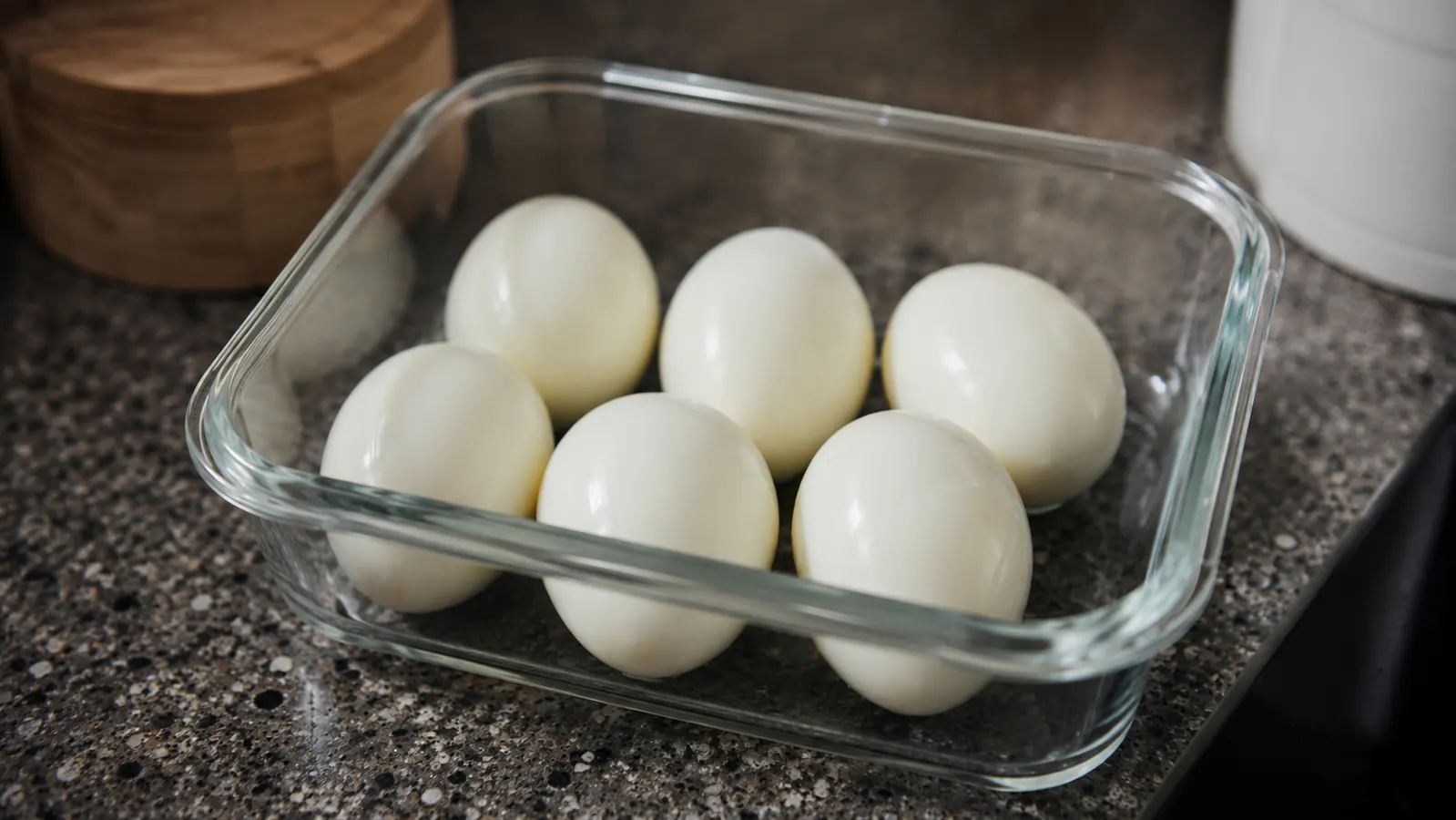
The thing I was most skeptical about before buying was whether it would actually cook eggs consistently. My old stovetop method was hit or miss depending on how distracted I got. I started timing the Dash results in my first month because I wanted data, not just a feeling. Using the same water level for hard-boiled (the highest line on the measuring cup), with eggs straight from the refrigerator and four eggs in the tray, I got a consistent result: fully cooked whites, fully cooked yolk with no green ring, and easy peeling. Out of roughly 25 test batches in the first two months, I got one undercooked result. That was a batch where I had put in warm eggs instead of cold. My error, not the machine.
Soft-boiled is where things got more variable. The soft setting left eggs that were slightly different batch to batch, and I eventually learned that altitude and egg size matter more than you might expect. I am at about 900 feet elevation in my apartment building, and large versus extra-large eggs change the result noticeably. Once I figured out the right water level for my situation (slightly above the soft line on the measuring cup for large eggs), I got reliable jammy yolks. But if you are at higher altitude or using inconsistent egg sizes, plan on a few test runs before you find your setting.
Out of six months of daily use, I can count the failed batches on one hand. That kind of reliability is what earns a permanent spot on a small counter.
The Poaching Tray and What It Can Actually Do
The Dash comes with a small silicone poaching tray that sits inside the unit and holds two eggs. I want to be honest about this feature because poached eggs on the Dash are not the same as restaurant poached eggs. They come out looking more like gently steamed eggs with rounded bottoms, not the free-form wispy whites you see at brunch. That said, they taste good and the yolks can absolutely be runny if you use the right water level and pull them right when the unit shuts off. If you are making eggs Benedict for company, use a pan. If you want a quick poached egg on toast on a Tuesday morning in your apartment, the Dash poaching tray is genuinely useful.
I use the poaching tray once or twice a month. My honest take is that hard-boiled is where this machine shines, and that the poaching capability is a useful bonus rather than a co-equal feature. Do not buy the Dash primarily for poached eggs. Buy it for boiled eggs and treat the poacher as a nice extra.
Cleaning and Long-Term Durability
The heating plate at the base of the unit is the part I was most worried about over time. It collects mineral deposits from the water, especially if you have hard tap water like I do in my building. After about six weeks of daily use I noticed a whitish film building up on the plate. The fix is simple: splash a little white vinegar on it, let it sit for a couple of minutes, and wipe with a damp cloth. I do this roughly once a month now and the plate looks fine. No corrosion, no scorching, no noticeable decline in performance.
The tray, lid, and poaching tray are all top-rack dishwasher safe, which matters a lot when you do not have a lot of counter space around your sink either. I run them through the dishwasher about once a week and hand-rinse the rest of the time. At six months, nothing has cracked, warped, or lost its coating. The dome is plastic, which is the part I expected to show wear first, but it still looks the same as when I bought it.
The cord is about two feet long, which is short. In a small kitchen that can actually be a benefit because it is less cord to manage, but if your outlet is not close to where you plan to set the unit, factor that in. I have never had to use an extension cord, but I did have to arrange my counter slightly to get the cord to reach.
What I Liked
- Consistent hard-boiled and medium-boiled results once you learn your water level
- Tiny footprint, roughly the size of a large coffee mug
- Auto shut-off means you can walk away and do other things
- Whistle alarm is loud enough to hear from another room
- Frees up a stove burner during busy morning cooking
- Dishwasher-safe trays and lid
- Priced low enough that long-term durability risk is manageable
Where It Falls Short
- Soft-boiled results vary more with altitude and egg size
- Mineral deposits on the heating plate need regular vinegar cleaning
- The cord is short at about two feet
- Poached eggs look different from pan-poached eggs
- Whistle alarm is not adjustable and can be jarring early in the morning
- Only cooks up to six eggs at a time, so it is not a batch-cooking tool for more than two people
Alternatives I Considered and Why I Kept Coming Back to the Dash
Before settling in with the Dash, I briefly used the stovetop method with a small saucepan, which works but has real downsides in a tiny kitchen. You use a burner, you have to watch the water, you time things carefully, and you still get inconsistent peeling depending on the egg freshness. I also looked at a couple of other dedicated egg cookers in the same price range. The Cuisinart egg cooker is larger and costs more. The cheaper unbranded options on Amazon had reviews that flagged heating plate failures after a few months. The Dash threads a real needle: it is cheap enough to take a chance on, but it has enough reviews and longevity data from other buyers to feel like a real product rather than a disposable one.
If you want to compare the Dash directly against the stovetop method in more detail, I put together a head-to-head breakdown in the Dash Egg Cooker vs Stovetop article. Short version: the Dash wins on convenience and consistency for everyday use. The stovetop wins when you need to cook more than six eggs at once.
Who This Is For
The Dash Rapid Egg Cooker is genuinely great for people who eat eggs regularly and live in a small space. If you are in an apartment, dorm, RV, or tiny home and you find yourself boiling water in a pot on a crowded stove a few mornings a week, this is an easy win. It is also a smart pick if you do any amount of meal prep. A batch of six hard-boiled eggs on Sunday takes about 12 minutes unattended and sets you up for quick breakfasts and snacks all week. I also think it is a great option for anyone who consistently overcooks or undercooks eggs on an electric coil burner, which is notoriously finicky. The Dash removes the variable completely. You fill the cup, press the button, and walk away.
If you want a deeper look at all the specific reasons this machine earns its counter space, I listed them out in the 10 Reasons the Dash Egg Cooker Is Worth the Counter Space article. It covers a few use cases I did not get into here, including using it for steamed vegetables and egg bites.
Who Should Skip It
If you only eat eggs occasionally, like once or twice a month, this is probably not worth the counter space. A pot of boiling water handles that fine. If you cook for four or more people regularly and need a high-volume egg solution, you will outgrow the six-egg capacity quickly. And if you are specifically looking for perfect soft-boiled eggs with a jammy yolk for refined presentations, plan on a learning curve to find the right water level for your altitude and egg size before you get reliable results. It is doable, but it takes a few test batches.
Six months in, I still reach for the Dash every morning before I reach for the stovetop.
The Dash Rapid Egg Cooker is compact enough for the tightest kitchen, consistent enough for daily use, and priced low enough that the risk is almost nothing. If you eat eggs most mornings, it earns its spot.
Amazon Check Today's Price on Amazon →