
You are staring at a 4.4-star rating backed by 119,000 reviews. That is a lot of votes. The instinct is to read it as a near-unanimous thumbs-up and click Add to Cart. I get it. I did the same thing. But a 4.4 out of 5 across that many reviews actually contains two very different crowds, and which crowd you belong to determines whether the Magic Bullet 11-Piece Set is exactly right for your small kitchen or a frustrating mismatch you will donate inside six months.
This is not another first-week glowing write-up. I want to walk you through what the rating distribution actually reveals, where the 1-star and 2-star reviews cluster (and why most of them are not the blender's fault), what the listing does not tell you upfront, and the specific use cases where this little 250-watt motor genuinely earns its price. By the end you will know whether to buy it or skip it, and if you buy it, exactly what to expect.
The Quick Verdict
A well-designed personal blender for the right use cases, but the Amazon listing undersells its limitations. Know what it can and cannot do before you commit.
Amazon Check Today's Price →If smoothies, dressings, and protein shakes are your thing, the Magic Bullet is hard to beat at this price.
Check current pricing on Amazon before the deal changes. The 11-piece set includes two short cups, one tall cup, a party mug, lids, and the lip rings you will actually use every day.
Amazon Check Today's Price on Amazon →What the Star Distribution Is Really Telling You
When a product has 119,000 ratings, the average hides the shape. The Magic Bullet's rating breakdown skews heavily toward 5-stars, with a dip in the 3-star range and a meaningful cluster in the 1-star and 2-star buckets. That shape is what researchers call a J-curve distribution: most people love it, a significant minority hates it, and very few people feel neutral. Products with J-curve distributions are not universally good or universally bad. They are a strong match for one type of buyer and a poor match for another.
The 5-star crowd is largely apartment dwellers, students, and people making one or two smoothies a day with soft ingredients. The 1-star crowd is overwhelmingly people who expected a Vitamix-level machine, tried to crush whole ice cubes on day one, or ran it continuously for longer than the motor is designed to handle. Both groups are right about what they experienced. The blender performed exactly as designed for one group and exactly as it was never designed for the other.
What the Listing Does Not Tell You Upfront
The Amazon product title is 'Magic Bullet Blender, Small, Silver, 11 Piece Set.' It does not mention the motor wattage on the first page unless you scroll to the specifications. That matters. Two hundred and fifty watts is an entry-level personal blender motor. It is enough for soft fruit smoothies, frozen fruit that has had a few minutes to soften, protein powder drinks, salad dressings, and simple dips like hummus from canned chickpeas. It is not enough for whole frozen strawberries straight from the bag, raw almonds blended into butter, or anything involving large chunks of hard produce like raw beets or uncooked carrots.
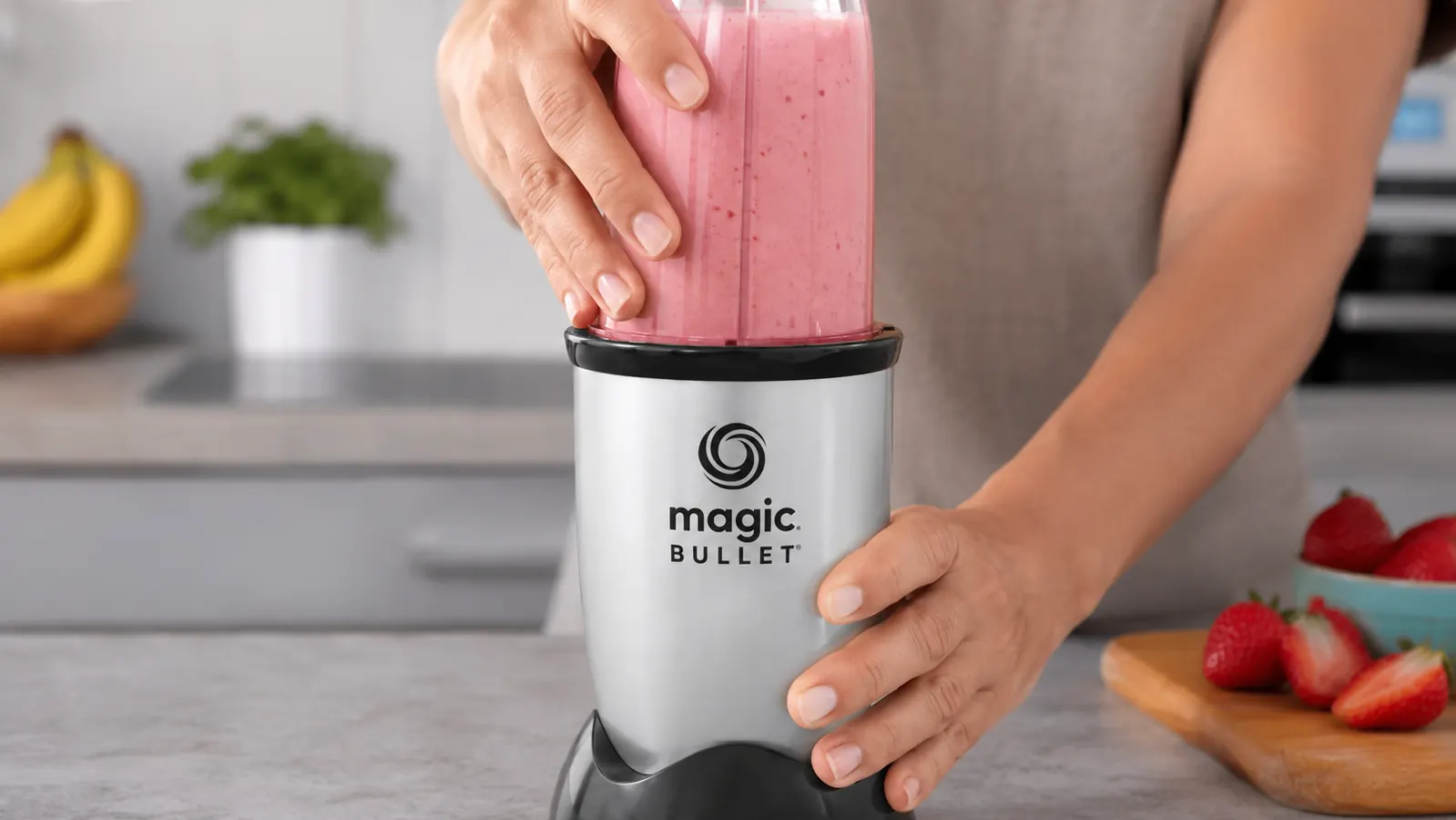
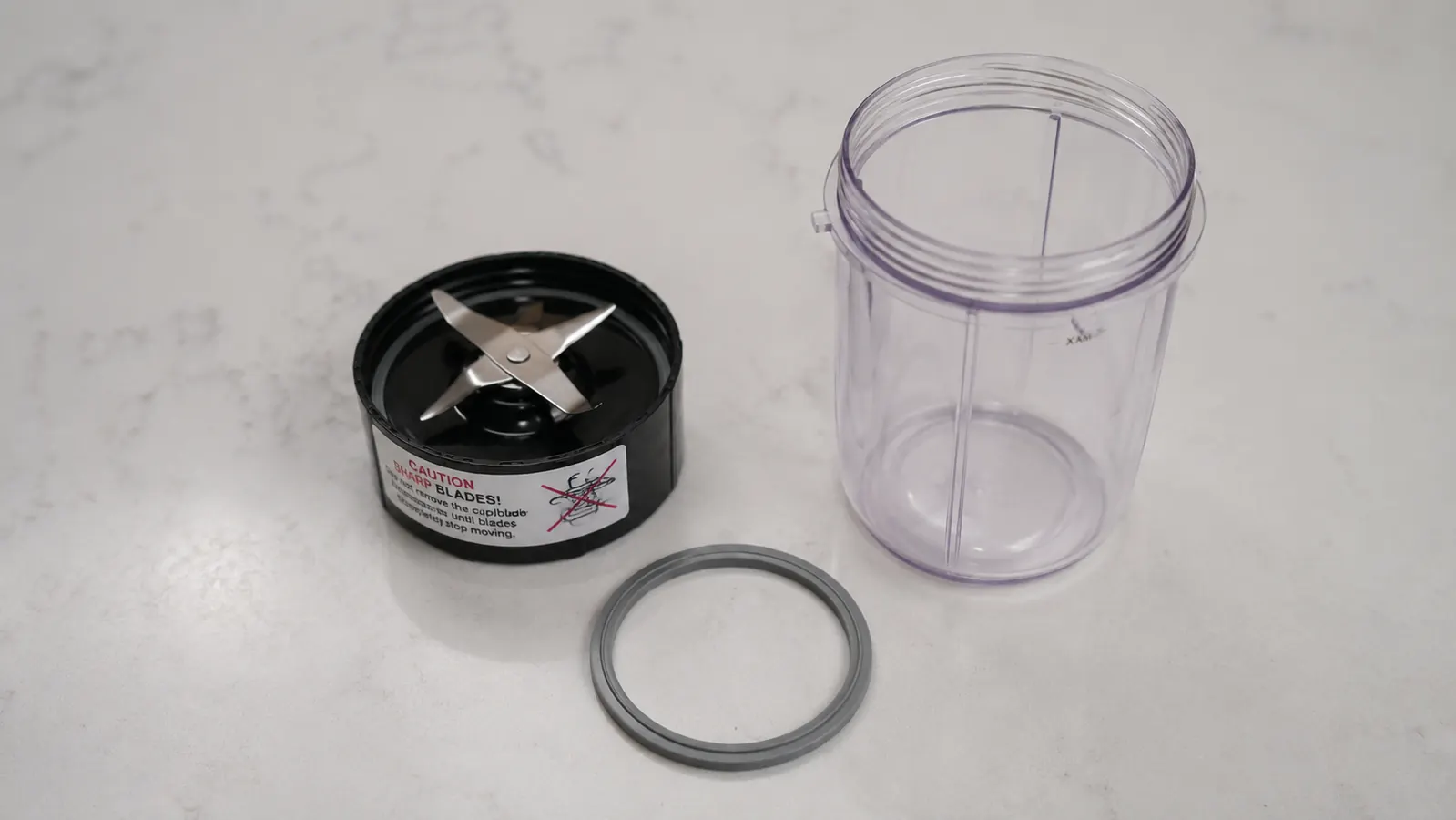
The listing also does not tell you that the Magic Bullet uses a twist-lock mechanism to secure the cup to the blade assembly. You fill the cup, flip it upside down, and twist it onto the motor base. That design is brilliant for small kitchens because the cup doubles as a drinking glass or storage container. But it means the cup must seal perfectly before you blend, and if the gasket ring on the blade assembly is not seated correctly, you will get leaks. Not catastrophic leaks, but enough to create a mess on your counter. Seat the gasket before every use. This takes two seconds and nobody tells you to do it.
The Failure Modes the Reviews Are Actually Describing
I went through the 1-star and 2-star reviews so you do not have to. The complaints break into four categories, and three of those four are avoidable with information the listing should make clearer.
Motor burnout. This is the most common 1-star complaint. A Magic Bullet motor is designed for short bursts, roughly 60 seconds at a time. Some reviewers describe running it for three or four minutes straight trying to process something thick, smelling burning, and having the motor fail. The instruction booklet mentions this. The listing does not. If you give the motor a 30-second rest between blending cycles, especially with thick ingredients, burnout is extremely unlikely.
Leaking. Second most common complaint. Almost always a gasket problem. The rubber ring on the blade assembly can slip out of its groove if you rush the assembly, and a misaligned gasket leaks. Check it before you blend. Press it firmly into the groove. Problem solved in the vast majority of cases.
Can't crush ice. Third most common complaint. Entirely a use-case mismatch. The Magic Bullet will handle soft frozen fruit that has thawed for a few minutes. It will not power through a cup of whole ice cubes from an ice maker. If your primary goal is blended margaritas or frozen drinks made from cubed ice, this is not the right machine and the listing should say so more clearly.
Stripped threads on the cup. This one shows up after months of use, not immediately. The cups thread onto the blade assembly and if you overtighten them, the plastic threads wear faster. Fingertip-tight is all you need. If you are muscle-tightening every time, the threads will eventually strip.
Three of the four most common failure modes are avoidable. The listing just does not tell you how to avoid them.
What It Does Surprisingly Well
Here is where the 5-star crowd is not wrong. For its intended use cases, the Magic Bullet is genuinely smart design. The cup-as-drinking-vessel setup means you blend directly in the container you are going to drink from or store food in. In a small kitchen with limited cabinet space and a narrow dish rack, not having to wash a separate blender pitcher is a real quality-of-life win. I use the short cups for salad dressings and the tall cup for smoothies, and both go straight from blending to the fridge with a lip ring pressed on.
Cleanup is fast in a way that matters when you are cooking in a tight space. Rinse the cup immediately after use, add a small drop of dish soap and a splash of water, run the blender for five seconds, rinse again. Done. No blender pitcher with corners that trap food residue, no separate lid assembly with six pieces. The whole cleaning process takes under a minute if you do it right away.
The footprint is worth mentioning even though every review mentions it. The motor base is roughly 4.5 inches in diameter. You can tuck it against a backsplash and it claims less counter real estate than a coffee mug collection. For galley kitchens and studio apartment setups where every square inch of counter is negotiated, this matters more than any spec sheet can convey.
The Ingredient Truth: What Works and What Does Not
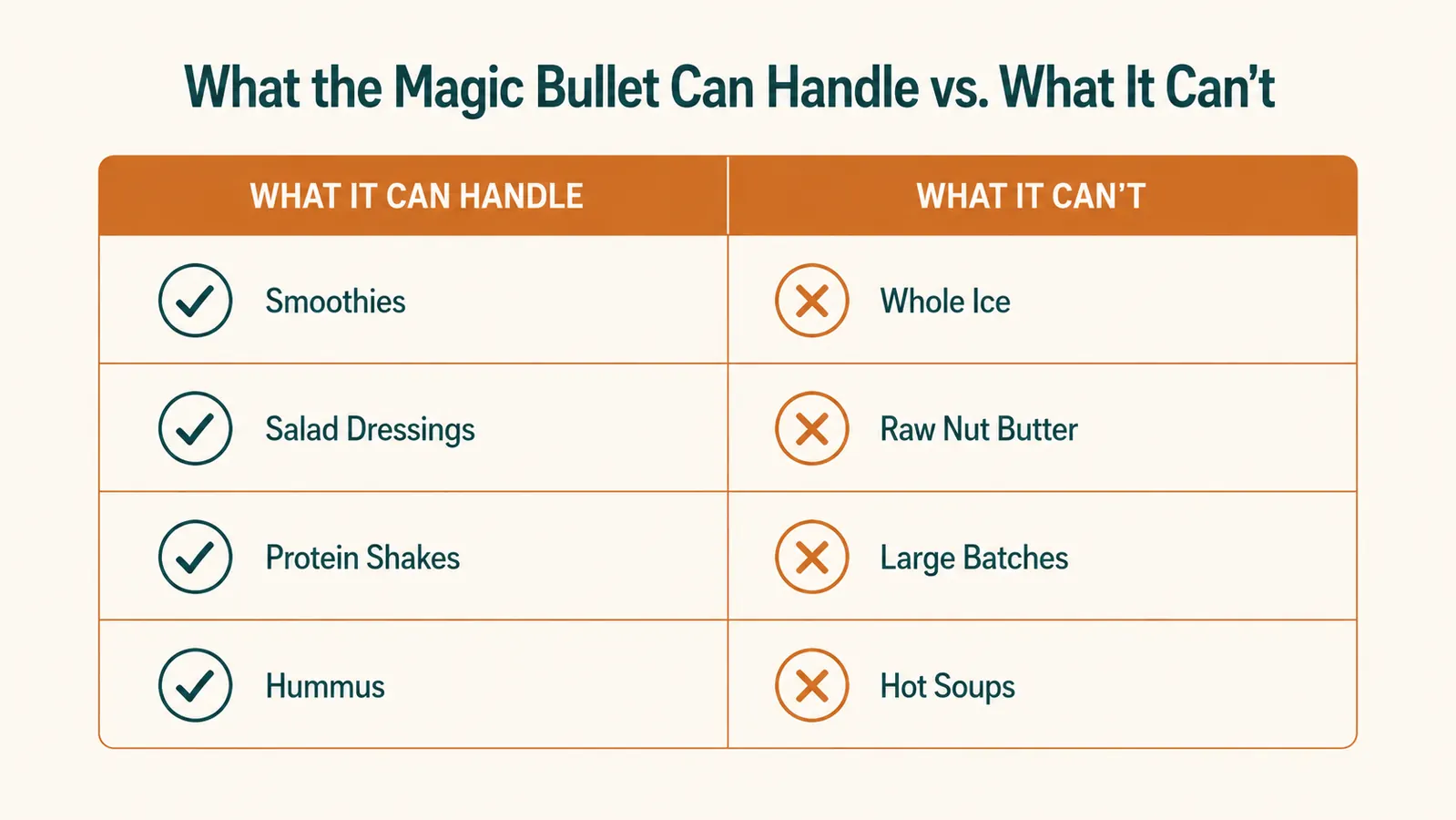
Soft fruit smoothies: works perfectly. Banana, strawberries, mango, peaches, a handful of spinach, a splash of almond milk. This is where the Magic Bullet was designed to live and it does the job smoothly. Let frozen ingredients thaw for three to five minutes first and the texture gets even better.
Protein shakes: works well. Protein powder blends clean with no clumping. The cups seal tight enough that you can shake the cup a bit if you want to, though the blender handles it without shaking. Greek yogurt and fruit blends come out creamy.
Hummus from canned chickpeas: works with patience. You will need to stop the blender, scrape down the sides with a small spatula, and blend again in 30-second cycles. It takes three or four rounds but the result is genuinely good hummus. Do not expect it to be as smooth as a food processor without that extra effort.
Salad dressings: one of its best applications. A quick vinaigrette, a tahini dressing, a simple avocado dressing. These come together in 20 seconds and the short cup is the perfect size for a single-serving portion.
Raw nut butters: not suitable. Do not try to run whole almonds or raw cashews through this motor hoping for nut butter. You will run the motor too hard, cycle it too many times, and risk burning it out. If nut butter is your goal, use roasted nuts that have some oil already released, and add a small drizzle of neutral oil. Even then, manage your expectations.
Whole cubed ice: not suitable. Crushed or pellet ice in small amounts, blended with liquid, is fine. Whole ice cubes from an ice maker will jam the blade and strain the motor.
The Accessories: Which Ones You Will Actually Use
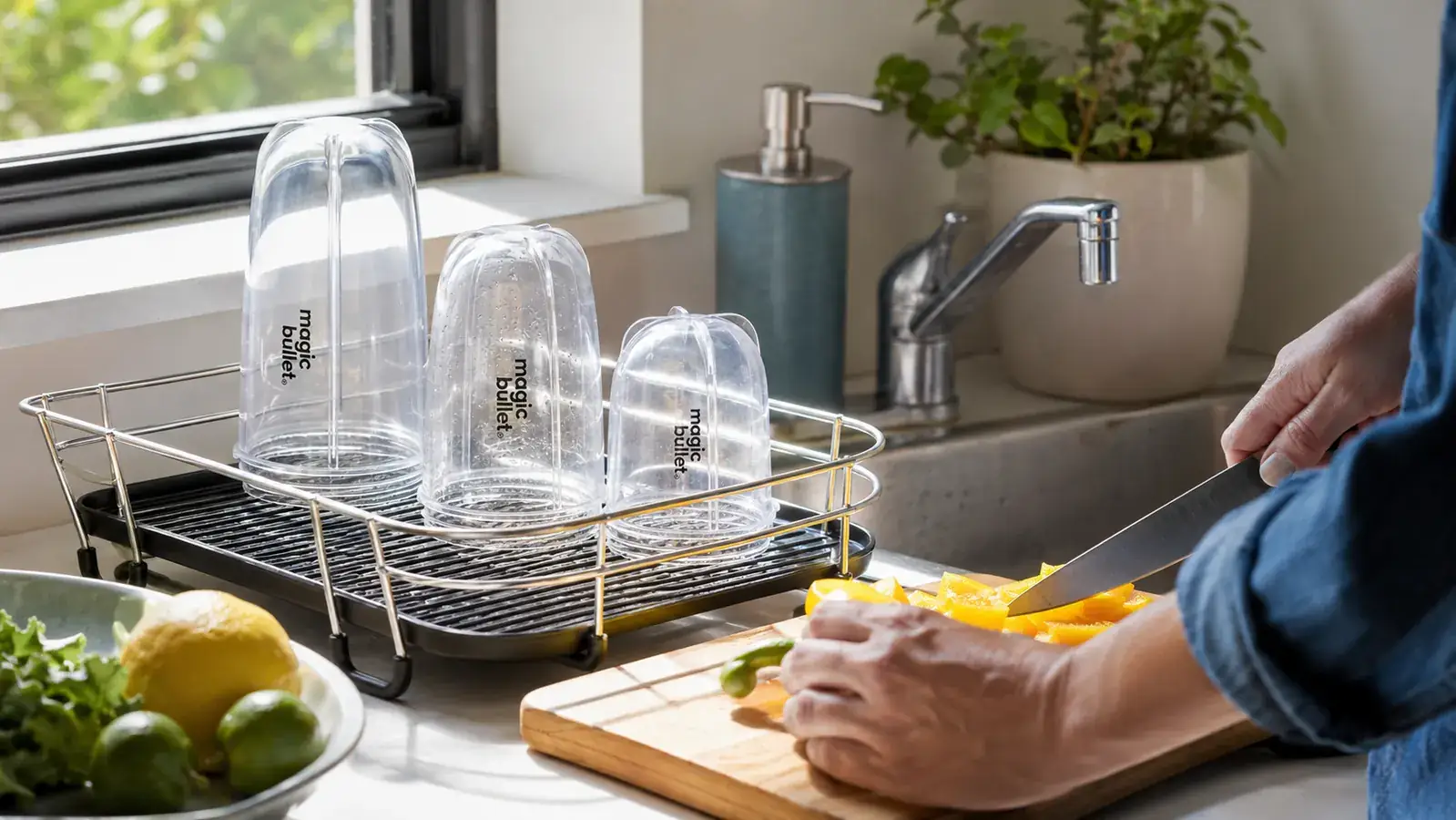
The 11-piece set includes a lot of pieces. Here is the honest breakdown. The two short cups (12 oz) and the tall cup (18 oz) are the workhorses. You will use these constantly. The party mug is a larger vessel that some people use and some never touch. The lip rings are genuinely useful: they press onto the rim of the cup and give you a cleaner drinking edge so the blade-assembly threads are not touching your mouth. I use lip rings daily. The flat lids are for storing filled cups in the fridge. Also genuinely useful.
The pieces you may not use as often: the additional blade assembly if you have two going at once, and any of the accessories that double as serving pieces. The value of the 11-piece set is that extra cups mean you can prep two things without stopping to wash. One cup in the fridge with leftover dressing, one in use for a smoothie. For small-kitchen cooking where you are usually prepping for one or two people, this is a practical setup.
How the Magic Bullet Compares to What You Might Already Own
If you have an immersion blender already, the Magic Bullet adds cup-based convenience and portability but overlaps significantly. Immersion blenders handle soups and larger batches better. The Magic Bullet is faster for single-serving smoothies and easier to travel with. They are not the same tool.
If you are considering a countertop blender like an Oster or Hamilton Beach model in the budget-to-mid range, the Magic Bullet trades batch size for footprint. A traditional blender pitcher holds 40 to 64 ounces. The Magic Bullet tallest cup holds 18 ounces. If you are cooking for more than one or two people regularly, the footprint savings may not be worth the batch size tradeoff.
Against a stick blender set with a chopper attachment, the Magic Bullet comes out about even for most apartment cooking tasks. The Magic Bullet is more compact. A stick blender with a chopper handles hard vegetables and larger quantities more reliably. Both are reasonable choices; which one fits depends on whether you have a drawer for a stick blender or counter space is the binding constraint.
What I Liked
- Tiny footprint: motor base is about 4.5 inches across, stores in almost any kitchen
- Cups double as glasses and storage containers, reducing total dishes
- Rinse-and-go cleanup in under a minute when done immediately after use
- Strong performer for smoothies, protein shakes, and dressings at this price point
- 11-piece accessory set gives you enough cups to prep multiple items without mid-session washing
- Affordable enough that replacing worn parts or buying a backup unit is realistic
Where It Falls Short
- 250-watt motor is real: cannot crush whole ice cubes, won't make raw nut butter, struggles with very dense or fibrous ingredients
- Cup size caps at 18 ounces, which limits you to single-serving portions
- Motor needs rest between cycles: 60 seconds on, 30 seconds off with thick blends
- Gasket ring must be seated properly before every blend or leaks occur
- Plastic cup threads can strip over time if overtightened
- Noise level is significant: not a quiet 6am blender in a thin-walled apartment
Who This Is For
The Magic Bullet is the right call if you are cooking for one or two people in a small space, your blending is mostly smoothies and drinks, and your top priority is saving counter space. It is also a good fit if you want something that does not require a dedicated cabinet shelf or a specific outlet location, since the cord is short and the base is small enough to tuck into almost any corner. Students, apartment renters, RV dwellers, and anyone who moved from a full-size house into a smaller space will get honest daily value out of it.
Who Should Skip It
If you cook for a family or regularly need to blend more than 18 ounces at a time, the cup size will frustrate you quickly. If frozen margaritas or cocktails made from whole ice cubes are your goal, look at a personal blender with a higher wattage motor in the 700 to 900 watt range. If you are deep into meal prep and want to make large batches of soups, sauces, or dips, a regular countertop blender or an immersion blender will serve you better. And if you are sensitive to noise and share thin walls with neighbors, factor in that this blender is noticeably loud on a hard countertop.
Still the best value personal blender for single-serving smoothies in a small kitchen, if you know what you are buying.
At its current price, the Magic Bullet 11-Piece Set is hard to argue with for the right use cases. Check what it is selling for today before you decide.
Amazon Check Today's Price on Amazon →