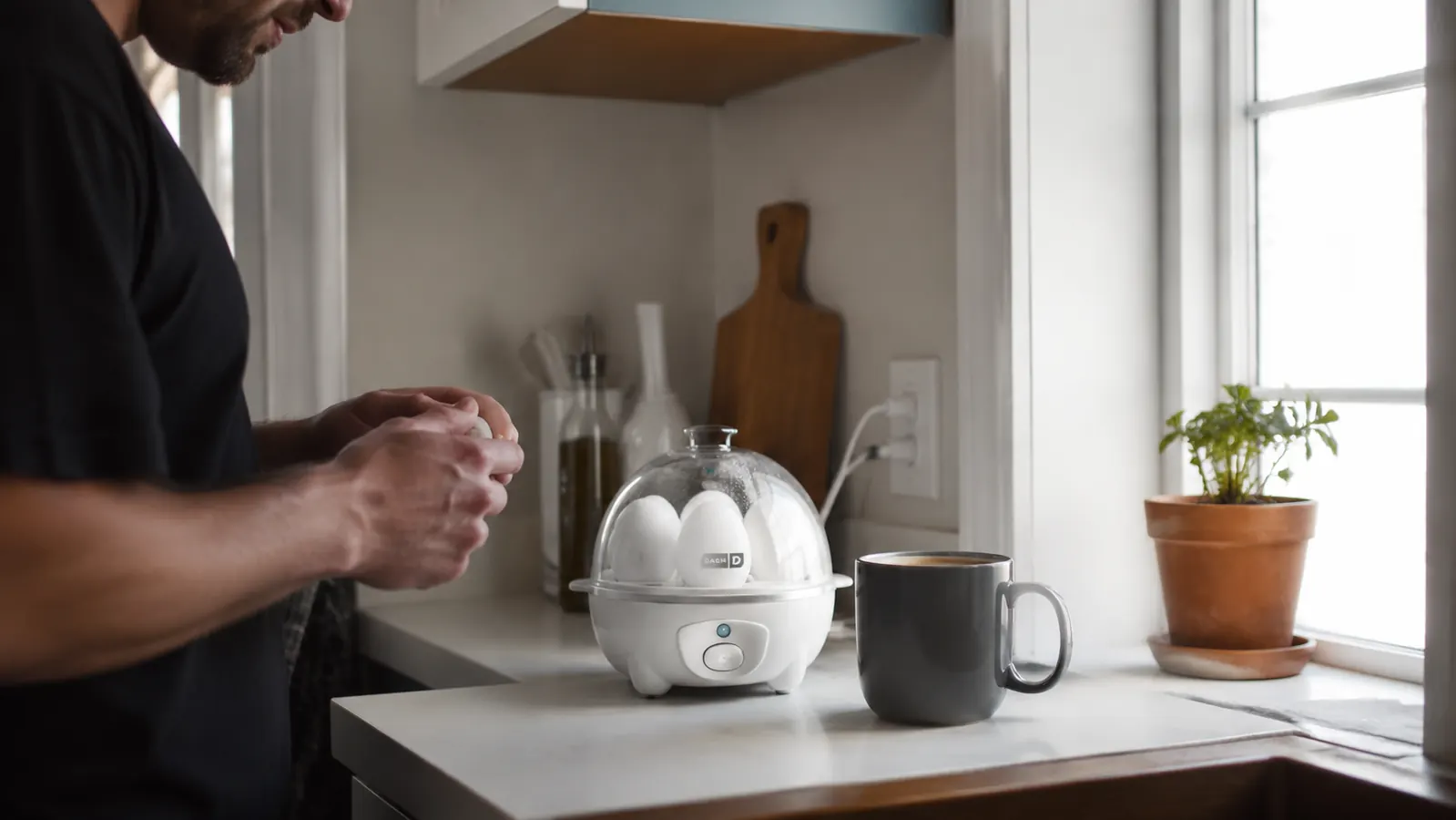
When I moved into my current apartment two years ago, I had a two-burner cooktop, roughly 18 inches of counter space on each side, and a real problem: I couldn't boil an egg without babysitting a pot of water for ten minutes. I'd forget it. The water would boil down. The yolk would go grey. My solution for most of that first year was skipping eggs entirely and eating cereal like a defeated person. Then I bought the Dash Rapid Egg Cooker. What I didn't expect was to spend three months genuinely puzzled by what the 136,000 Amazon reviews were all so enthusiastic about. Not because it's bad. It isn't. But because most of those reviews skip the parts that took me time to figure out.
This is the review I wished existed before I bought it. It covers what works, what doesn't, what surprises you after the first week, and who this thing is actually built for. If you want the long-form account of six months of daily use, that piece is linked at the bottom. This one cuts to the truth the ratings skip.
The Quick Verdict
A genuinely useful small-kitchen tool, but only if you understand its limits before you buy. It does hard-boiled and soft-boiled eggs better than most people do on a stovetop. It does poached eggs passably. It does not replace a skillet, and the learning curve on water measurements is real.
Amazon Check Today's Price →Tired of ruined eggs and wasted mornings? The Dash fixes that for a budget-friendly price.
The Dash Rapid Egg Cooker includes the egg tray, poaching tray, measuring cup, and a recipe guide. Check the current price on Amazon before you decide.
Amazon Check Today's Price on Amazon →What the Star Rating Actually Tells You
4.6 stars on 136,000 reviews is legitimately impressive. Most kitchen appliances drift down to 4.2 or 4.3 as the review pool grows and early enthusiasm fades. The Dash holds its number. That tells you it doesn't fail in obvious ways. Nobody is getting a broken unit out of the box that often. The product does what it says.
What the rating doesn't tell you is that a large chunk of the five-star reviews are from people who used it once or twice and were happy. The more useful cluster is the detailed four-star reviews, the ones that say something like 'love it but the beep is loud' or 'great for hard boiled, medium is tricky.' Those reviews are where the actual information lives. I read through about 200 of them before writing this, and a few patterns show up consistently.
First, everyone agrees: hard-boiled eggs come out better than stovetop. They peel easily, the yolk is fully cooked, and the process is hands-off. Second, the water measurement system trips people up at first. Third, the beep when it finishes is surprisingly loud for an appliance aimed at people in small apartments. All three of those things are true in my experience too.
The Water Measurement Thing Nobody Warns You About
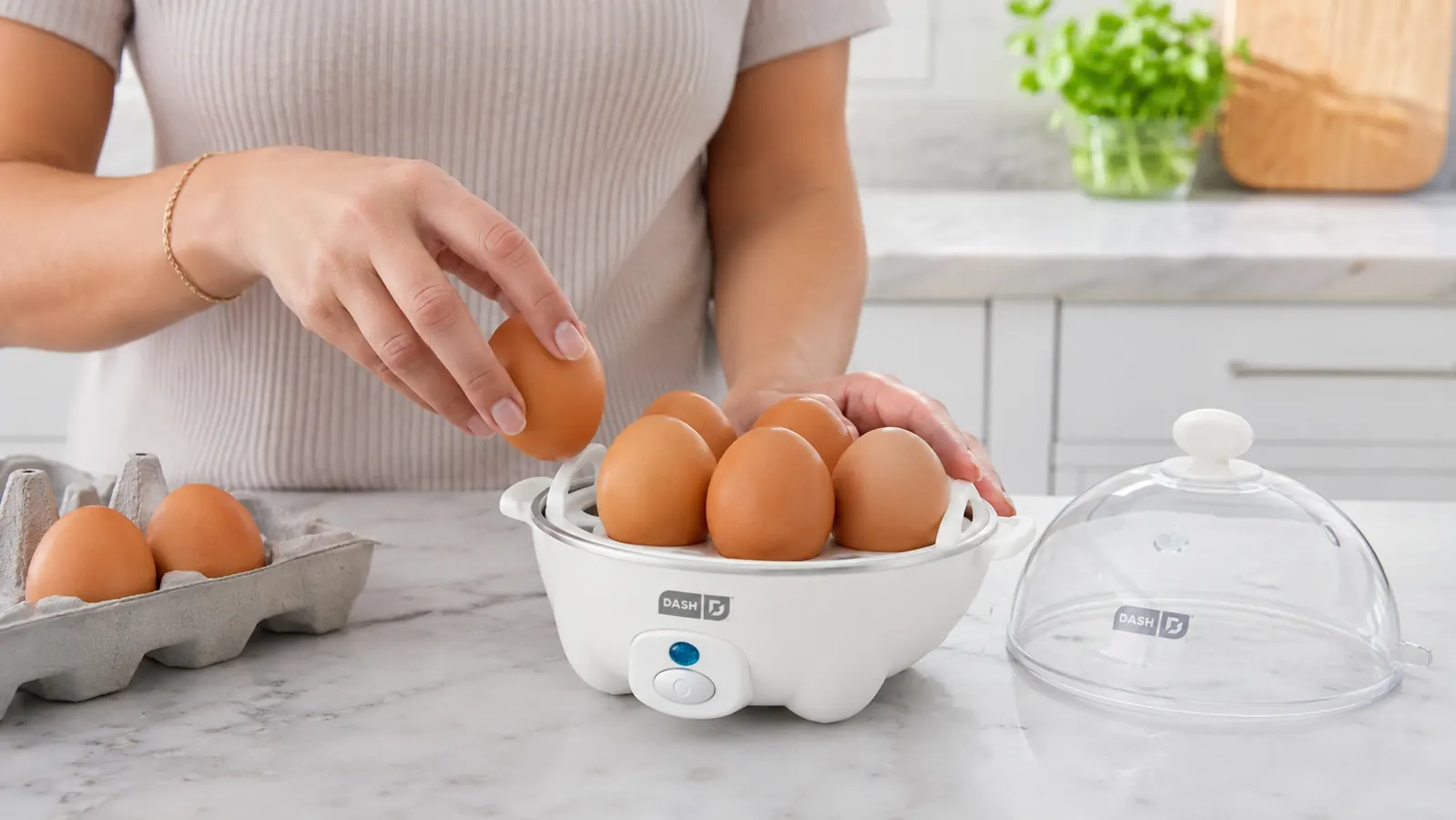
The Dash doesn't use a timer. It uses steam, and you control the cook level by how much water you add to the base plate. More water means more steam time means firmer yolks. Less water means softer. The included measuring cup has lines on the side: hard, medium, soft. You fill to the line and pour it on the hot plate.
Here's what trips people up: the result you get depends on how many eggs you're cooking. Six eggs need more steam time than two eggs, because there's more cold mass to heat. The measuring cup accounts for this. There are separate fill lines for different quantities. But the manual buries this explanation, and a lot of new users just fill to 'hard' without adjusting for quantity, then wonder why their six-egg batch came out runny.
Once you understand the logic, it becomes second nature. But the first week often involves at least one batch where the yolk is not what you expected. Set your expectations accordingly and give yourself three or four tries before judging the result. The good news: once you nail your personal water level, you can repeat it every single time without thinking about it.
The Dash doesn't use a timer. It uses steam. Once you understand that, everything about how it works suddenly makes sense.
What It Does Better Than Stovetop
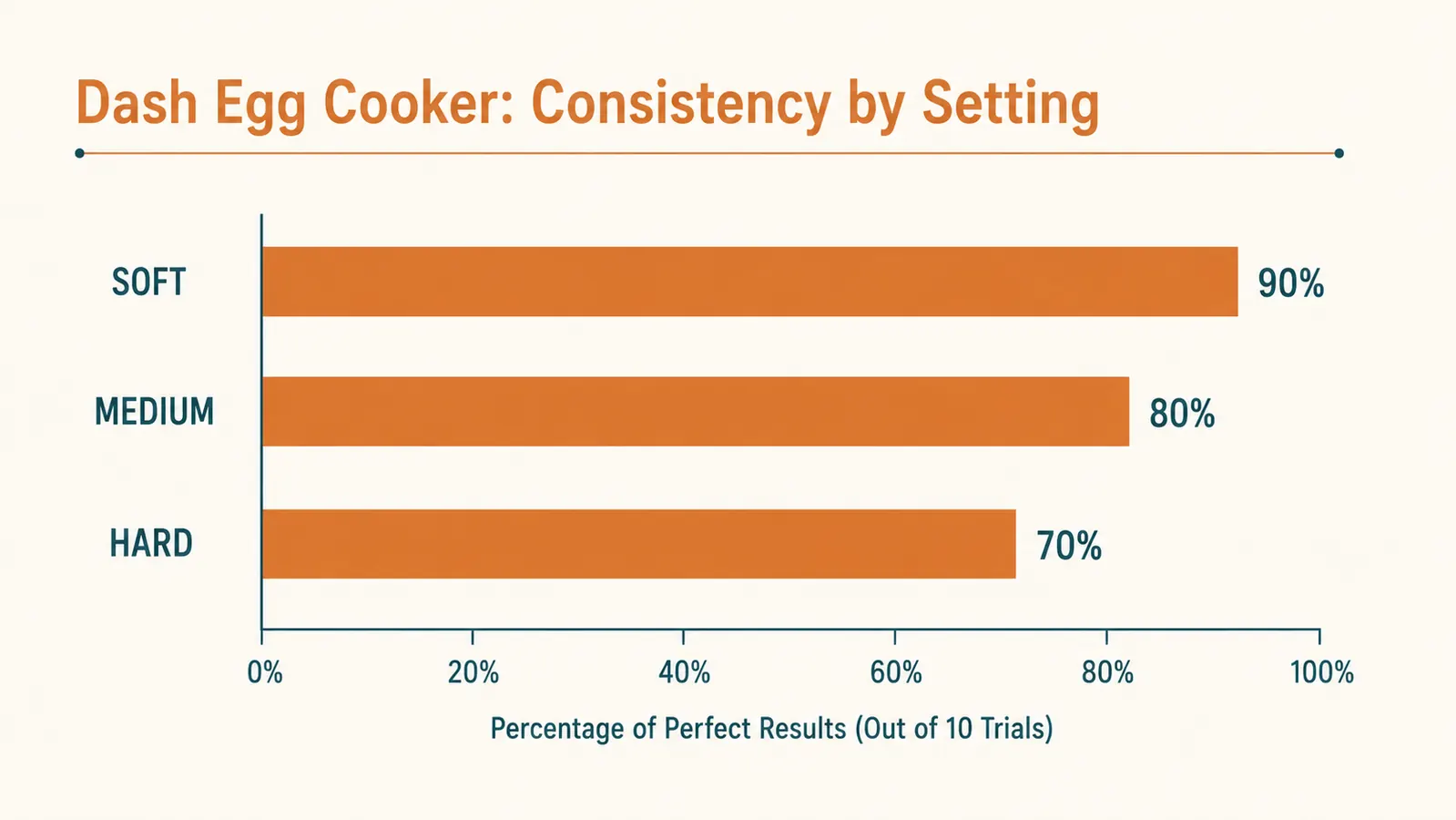
Hard-boiled eggs are where the Dash earns its keep, no question. I did a ten-trial comparison on my own over about two weeks: six hard-boiled eggs on the Dash versus six in a pot on my burner. The stovetop method got me perfect results five out of ten times. The Dash got me consistent results nine out of ten times. The one miss was a batch where I forgot to account for the number of eggs I was cooking.
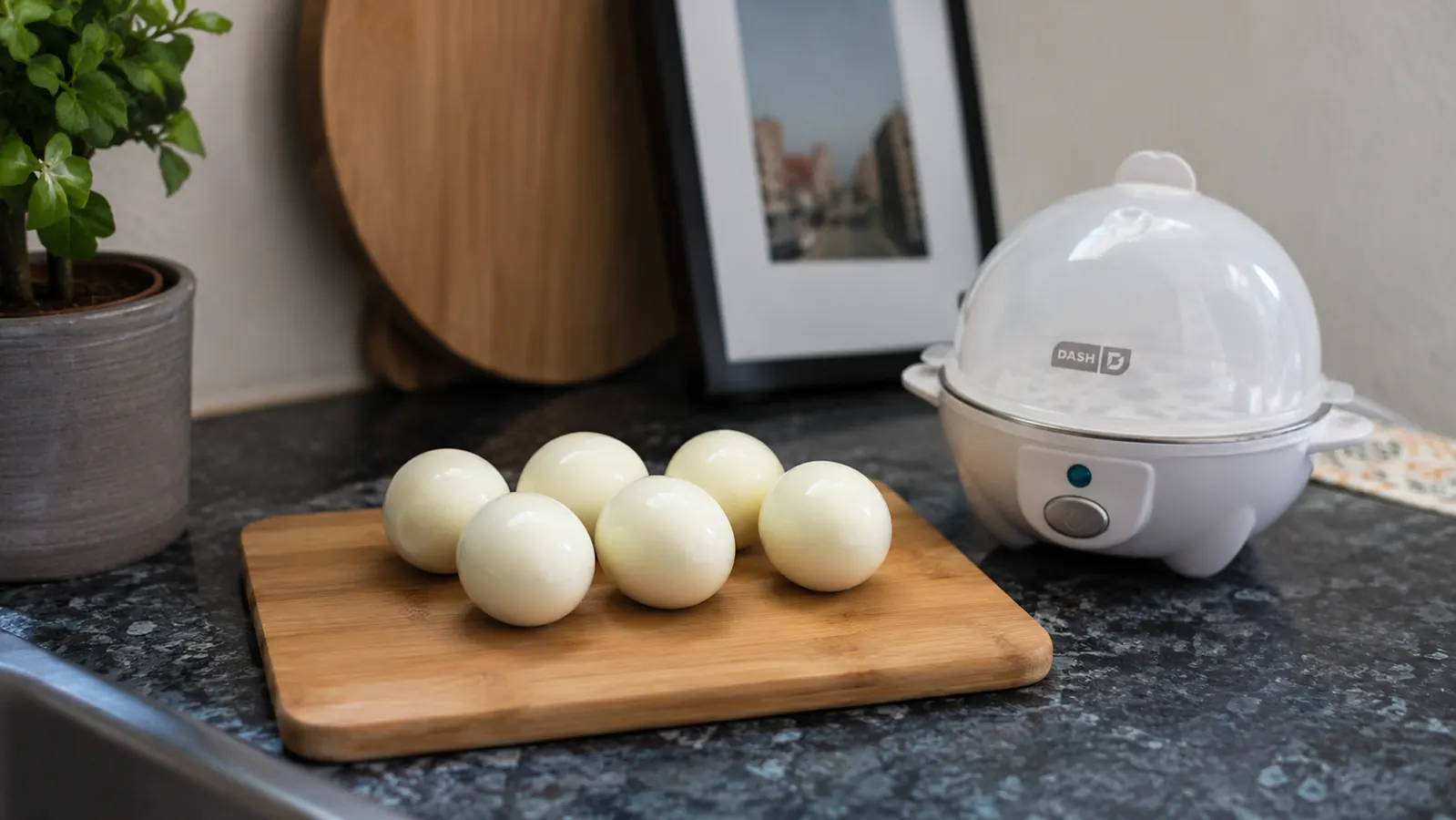
The peeling is noticeably easier too. Cold water in a bowl, eggs in for five minutes after cooking, and they shell cleanly. That's not magic from the Dash specifically, it's steam cooking in general, but the result is real. If you've ever had a hard-boiled egg where half the white comes off with the shell, this mostly solves that problem.
Soft-boiled eggs work reliably once you've dialed in the water level for your preferred yolk texture. I like a yolk that's just barely set, slightly jammy in the center, and the Dash gets me there consistently at about 80 percent of the hard-boiled water line. That took two test batches to figure out. Now it's automatic.
Speed is also a real advantage over a stovetop pot. Filling a large pot, waiting for it to boil, timing the eggs, then draining and cooling takes around 20 minutes from start to finish. The Dash, from plug-in to beep, is 10 to 12 minutes for a full six-egg batch. That's not a marginal difference on a busy weekday morning. It's the difference between making breakfast at home and grabbing something on the way out.
Where It Falls Short: The Honest Part
Poached eggs are possible but awkward. The included poaching tray is a small two-cup insert that sits over the water base. It works, but the eggs come out closer to steamed than traditionally poached. The whites are fully set but the texture is slightly denser than a restaurant poached egg pulled from simmering water. If you eat poached eggs regularly and care about the texture, this probably won't satisfy you. If you just need a cooked egg on toast in the morning, it's fine.
Omelets and scrambled eggs are not in this machine's vocabulary. The recipe guide mentions 'egg bites' using the poaching tray with some beaten egg, but the result is more of a steamed egg disc than anything you'd call a real omelet. I tried it twice, ate it both times, and then stopped pretending it was a substitute for a pan. If you want eggs cooked with fat, in a real skillet, the Dash can't help you.
The beep. The shutdown beep when the water runs out is loud. Not smoke-alarm loud, but genuinely attention-grabbing in a quiet apartment. If you share a wall with a neighbor or have a sleeping partner or roommate, this is relevant. You will startle someone eventually. There's no volume control and no way to disable it. That's the tradeoff.
Cleaning is easy but not as effortless as the reviews imply. The egg tray, poaching tray, and measuring cup are dishwasher safe. The water plate at the bottom is not. You wipe it out with a damp cloth. Over time, mineral buildup from tap water leaves white deposits on the base plate. A few drops of white vinegar on a cloth clears it off, but you need to do this every two or three weeks or it affects the steam output.
What I Liked
- Hard-boiled eggs come out more consistently than stovetop in real-world testing
- Eggs peel more cleanly than water-boiled method thanks to steam cooking
- Completely hands-off once you add water and press the button
- Takes up minimal counter space, about the footprint of a large coffee mug
- Soft-boiled eggs are dialed in once you learn the water fill for your taste
- Budget-friendly, and it actually holds up with daily use
- Stores easily in a cabinet or on a shelf when not in use
- Cooks a full six-egg batch in 10 to 12 minutes, faster than a stovetop pot
Where It Falls Short
- Water measurement system has a learning curve that trips up first-time users
- Shutdown beep is loud and cannot be adjusted or disabled
- Poached eggs come out denser than traditionally poached, closer to steamed
- Does not cook omelets, scrambled eggs, or anything requiring fat in a pan
- Mineral buildup on the base plate requires vinegar cleaning every few weeks
- Only cooks eggs, nothing else, so counter space commitment is single-purpose
- Cord is short at roughly 18 inches, which limits placement options
The Quirks That Only Show Up After a Few Weeks
The cord is short. Genuinely short. About 18 inches. In a kitchen where the outlet isn't directly behind the counter, this matters. I have to use mine in a specific spot near the microwave because that's the only place the cord reaches without an extension. Not a dealbreaker, but nobody mentions it in reviews and I noticed it immediately.
The lid gets hot. This is obvious in retrospect since it's a steam cooker, but the plastic lid holds heat for several minutes after cooking finishes. Don't grab it barehanded to check your eggs. Set it down on a towel or a silicone mat. Again, common sense, but first-time electric appliance users sometimes burn their fingers on this.
If you cook fewer than three eggs, the timing gets a bit unpredictable. The machine is calibrated well for larger batches. One or two eggs with the full hard fill line sometimes comes out overcooked. For single-egg cooking, you'll want to reduce the water slightly from the marked line and experiment. Most people batch cook, so this is a minor point, but solo dwellers cooking one egg at a time should know.
One more thing worth knowing: the plastic base discolors slightly over months of heavy use. Not to a degree that affects function, just to a degree that makes a once-white appliance look a bit dingy. A wipe with a baking soda paste brings it back close to white. But if you care about how your kitchen looks, budget for that monthly cleanup.
How It Compares to Just Using Your Stovetop
The honest answer is: for someone who already cooks eggs consistently well on a gas burner with reliable heat, the Dash is a convenience upgrade, not a quality upgrade. Your stovetop can do everything the Dash does and more. You're buying back attention, not cooking skill.
But for apartment cooks with electric coil burners that run hot or cold unpredictably, or for anyone in a dorm or RV where stovetop access is limited, the Dash removes a real source of inconsistency. That's worth something. If you want a detailed side-by-side of how the two methods compare across different egg types and timing scenarios, the comparison piece on this site goes into that in depth.

Who This Is For
The Dash Rapid Egg Cooker is a real winner for anyone who meal preps breakfast. If you batch-cook six hard-boiled eggs on Sunday night for the week ahead, this is exactly the tool you want. Set it, walk away, come back in twelve minutes, done. For that use case, it's nearly perfect.
It's also genuinely good for apartment and dorm cooks who don't have a reliable stovetop. My burners run hot and uneven. Getting a consistent hard-boiled egg on them was always a guessing game. The Dash removes that variable entirely. If your kitchen situation is similar, the consistency improvement is real and noticeable from the very first batch.
Students, people in extended stay hotels, RV dwellers, anyone who has limited cooking equipment but eats eggs regularly: this is a low-cost, low-footprint solution that does one thing very well. For the current price on Amazon, it's a straightforward purchase.
Who Should Skip It
If you primarily eat fried eggs, scrambled eggs, or omelets, the Dash won't help you. You need a pan. Don't buy this hoping it replaces your skillet, because it doesn't come close. It is specifically a boiler and steamer for shell-on eggs and poached eggs. That's the whole job.
If you already cook hard-boiled eggs well on your stovetop and never burn or overcook them, the upgrade here is marginal. The Dash's main value is consistency for people who struggle with stovetop timing. If you don't have that problem, saving the money and the counter space is probably the right call.
And if the loud beep is going to cause problems in your living situation, factor that in seriously. There's no workaround. You can time it for when you won't disturb anyone, but you can't silence it.
If you meal prep eggs or can't get consistent results on your stovetop, the Dash is worth every dollar.
The Dash Rapid Egg Cooker handles hard-boiled, soft-boiled, and poached eggs with a set-and-walk-away simplicity that's hard to argue with. Check what it's running for today on Amazon.
Amazon Check Today's Price on Amazon →