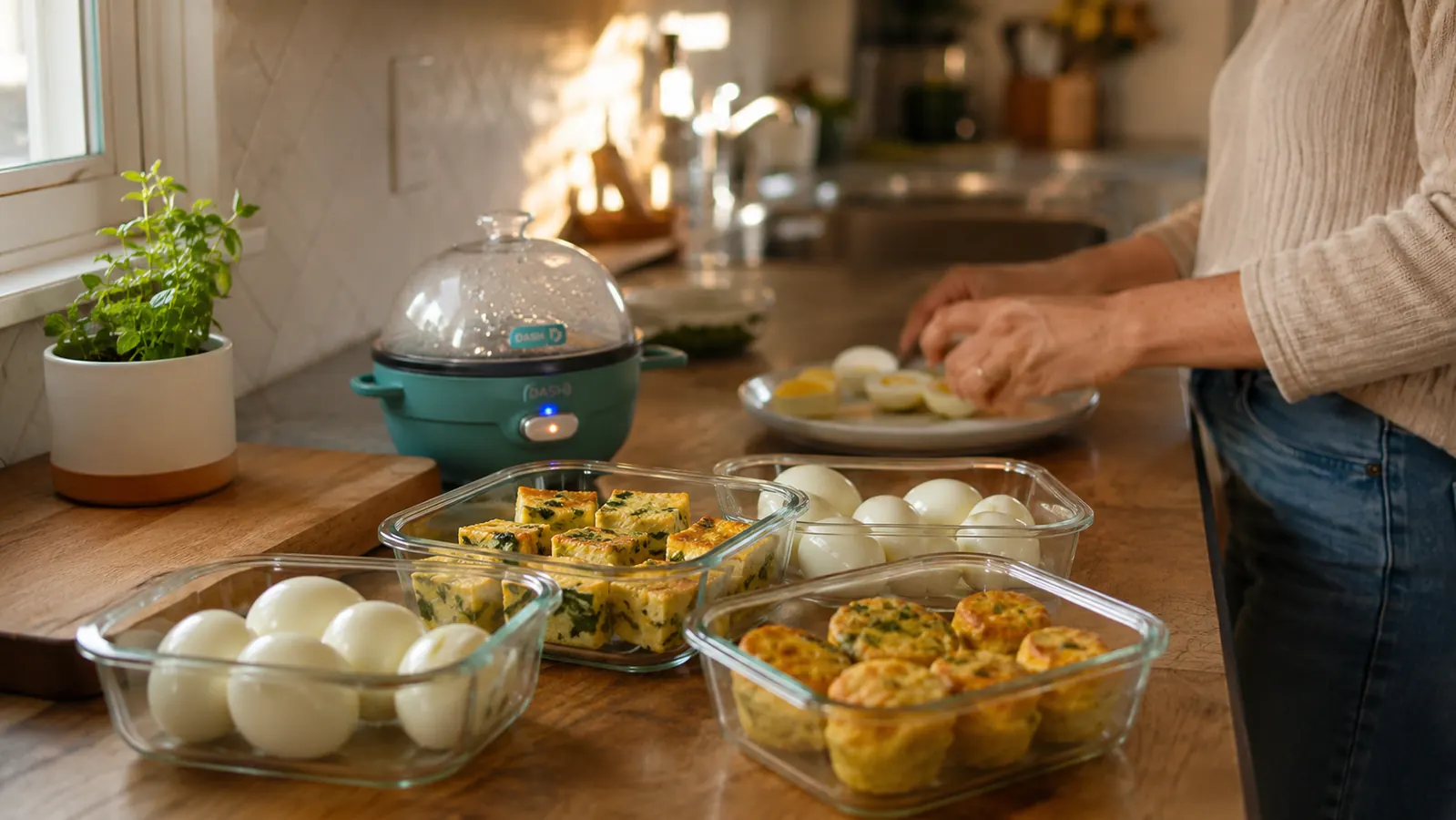
Most weekday mornings in my apartment, I have exactly twelve minutes between my alarm and leaving the door. Scrambling eggs from scratch is not happening. Waiting for water to boil on the stovetop is not happening. And spending money on a breakfast sandwich at the corner deli every single day stopped being an option the moment I sat down and did the math. What I needed was a real, repeatable system. The Dash Rapid Egg Cooker gave me one. With 136,043 Amazon reviews and a budget-friendly price tag, it looked almost too simple to be worth the counter space. But after a few Sunday sessions prepping eggs for the week ahead, it earned a permanent spot next to my coffee maker in my 280-square-foot studio.
This guide walks you through exactly how I use the Dash Rapid Egg Cooker to prep a full week of eggs in one session. You will get hard-boiled eggs for quick snacking, poached eggs stored for salads and grain bowls, and steamed egg bites for grab-and-go mornings. The whole thing takes under twenty minutes of active time. The rest is just waiting.
Still boiling water every morning and hoping for the best? The Dash Rapid Egg Cooker preps six eggs at a time, shuts off automatically, and takes up less space than a toaster.
It has a 4.6-star rating from over 136,000 buyers and costs about what you'd spend on a week of breakfast sandwiches. If Sunday prep is the goal, this is the tool that makes it repeatable.
Amazon Check Today's Price on Amazon →Step 1: Gather Your Eggs and Decide What You Are Making
Before you touch the Dash, figure out how you actually want to eat eggs this week. I usually prep two types in one session: a full batch of six hard-boiled eggs for snacking and topping salads, plus a batch of four poached eggs stored in cold water for grain bowls. If I have a few extra minutes, I will do a third round of steamed egg bites using the poaching tray with a silicone mold insert.
The Dash holds up to six eggs in the hard-boil tray, or two eggs in the poaching tray, or a single silicone mold in the steamer position. Plan your batch order accordingly. I always start with the hard-boiled batch because those keep the longest in the fridge (up to one week in the shell, five days peeled). Poached eggs and egg bites I make second and use earlier in the week.
For a standard week, I buy one dozen eggs. Six go to hard-boiling, four go to poaching in two rounds of two, and two go to egg bites. That covers breakfast for five days with eggs left over for a weekend omelet.
Step 2: Use the Measuring Cup Correctly (This Is Where Most People Go Wrong)
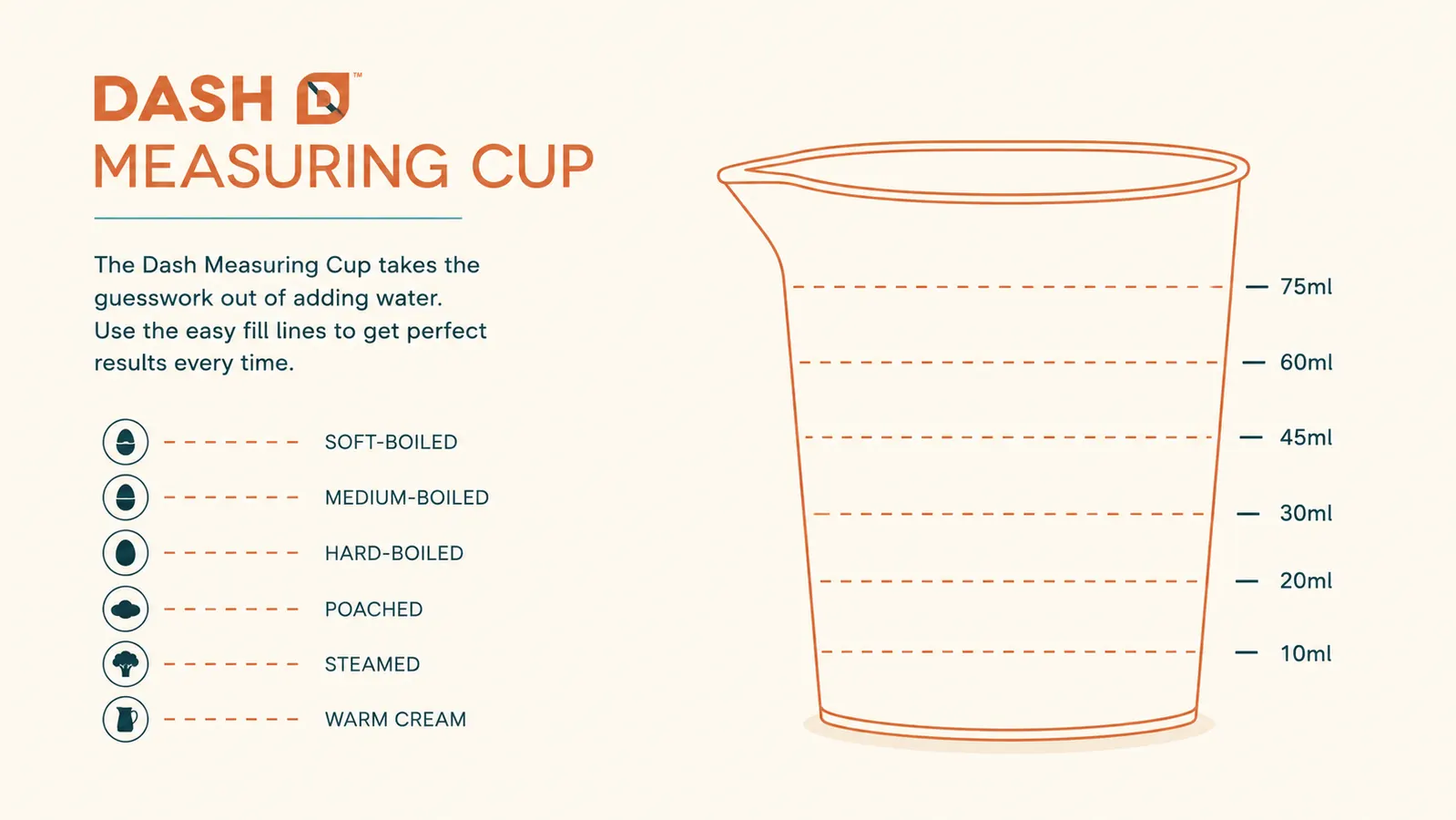
The Dash comes with a small measuring cup that has multiple fill lines on the side. Each line corresponds to a different egg style and a different number of eggs. This is the most important thing to get right. Too little water and the eggs undercook. Too much water and you get rubbery hard-boiled eggs or overcooked poached eggs.
For six hard-boiled eggs, fill to the hard-boil line (it is the highest line on the cup). For medium-boiled, fill to the medium line. For soft-boiled, use the lowest line. For two poached eggs, fill to the poach line marked on the cup. For steamed egg bites in a silicone mold, use the same fill level as poached. Pour the measured water directly into the center well of the heating plate before you add the eggs or tray.
A tip from experience: pierce each egg with the included pin before hard-boiling. The pin is built into the bottom of the measuring cup. One quick press on the wide end of each egg before loading them into the tray prevents cracking and makes peeling dramatically easier later. I skipped this step the first two times and paid for it with split eggs and peel that came off in tiny frustrated fragments.
Step 3: Run Your Hard-Boiled Batch and Set Up an Ice Bath
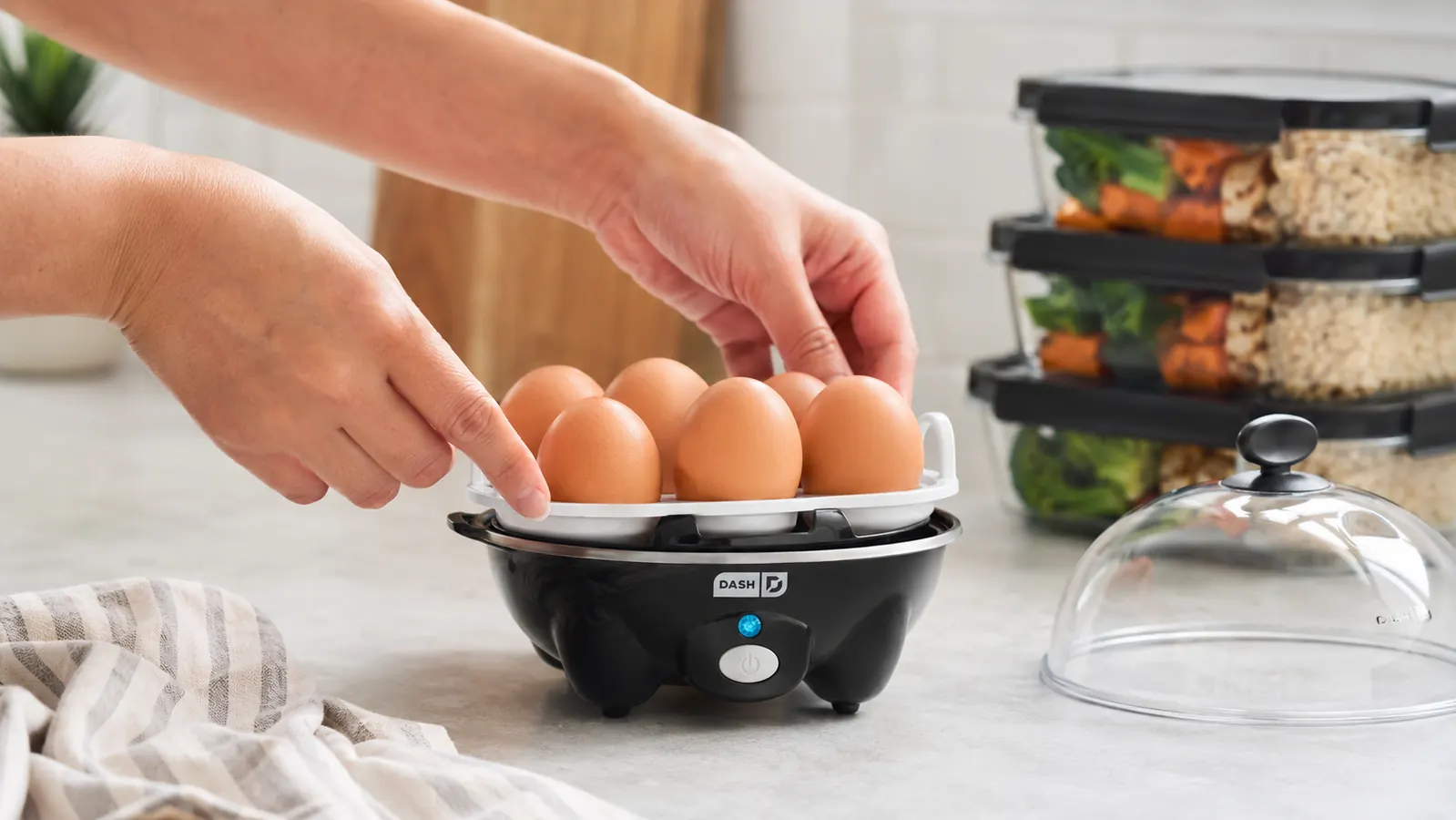
Load the pierced eggs into the egg tray, set the tray on the heating plate, and place the dome lid on top. Press the power button. The Dash will beep and shut off automatically when the water has evaporated and the eggs are done. For six hard-boiled eggs, that takes about twelve minutes depending on your altitude and how cold your eggs were coming out of the fridge. I start a small bowl of ice water on the counter right when I press the button.
When the Dash beeps, move the eggs immediately into the ice bath. This stops the cooking, prevents the gray ring around the yolk that happens with overcooked eggs, and makes the shells slip off cleanly. Leave them in the ice water for at least five minutes. Then peel them under a thin stream of cold tap water, which helps the shell separate from the membrane.
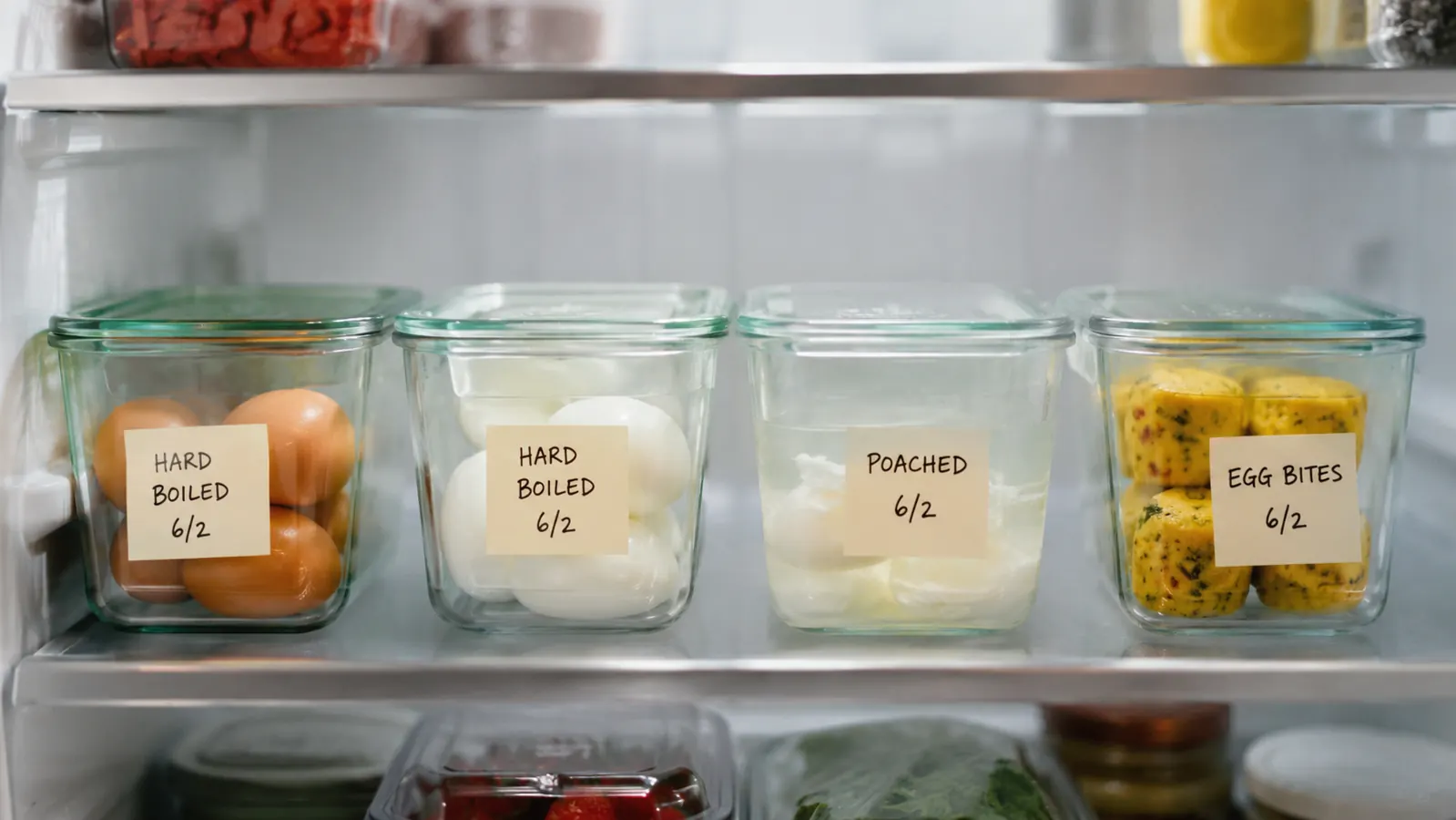
Store peeled hard-boiled eggs in an airtight container in the fridge. Add a paper towel to absorb moisture and they will stay fresh for up to five days. I use a wide-mouth pint mason jar with a lid, which fits six eggs perfectly and takes almost no shelf space.
Step 4: Poach a Second Batch for Salads and Grain Bowls
Rinse out the Dash's center well and dry it with a paper towel before the second round. Add fresh water measured to the poach line. Lightly coat the poaching cups with a small amount of oil or cooking spray so the eggs release cleanly. Crack one egg into each cup, set the poaching tray onto the heating plate, and place the dome on top. Poached eggs in the Dash take about eight to ten minutes.
To store poached eggs for later in the week, let them cool on a plate for two minutes. Then slide them into a shallow container of cold water, making sure each egg is submerged. Seal the container and refrigerate. They will keep for up to three days. To reheat, just drop a poached egg into a bowl of hot (not boiling) water for ninety seconds. The yolk stays soft and the white firms up gently. This method works better than reheating in a microwave, which turns the white rubbery.
Stored in cold water in a sealed container, poached eggs reheat beautifully in ninety seconds and stay soft-yolk through day three. That is a grain bowl breakfast for free on a Tuesday morning.
Step 5: Make Egg Bites for Grab-and-Go Breakfasts
Steamed egg bites are the most versatile thing the Dash can do for meal prep. You will need a small silicone egg mold that fits inside the Dash dome. Most four-cavity or six-cavity silicone molds designed for the Instant Pot work fine, as long as the diameter is under four inches. I use a four-cavity round mold.
Whisk two eggs with a tablespoon of milk and a pinch of salt. Stir in whatever you want: shredded cheese, diced bell pepper, cooked crumbled sausage, spinach, or a spoonful of salsa. Pour the mixture into the mold cavities, filling each about three-quarters full. Place the mold directly on the Dash heating plate (no egg tray needed), add the measured water to the poach line, and dome it. The egg bites steam in about ten to twelve minutes.
Once they cool, pop the bites out of the mold and store them in a sealed container in the fridge. They reheat in thirty seconds in a microwave, or two minutes in a toaster oven if you want the edges slightly crispy. These are my main weekday breakfast on days when I am out the door in under ten minutes. Two egg bites and a piece of fruit covers breakfast without any cooking in the morning.
What Else Helps with Egg Meal Prep
The Dash handles the cooking, but a few other things make the whole system work better in a small kitchen. First, wide-mouth mason jars are the best storage containers for hard-boiled eggs. They stack cleanly on a fridge shelf, seal airtight, and do not hold odors the way plastic containers can after a few weeks. Second, a small prep bowl for the ice bath makes a real difference. In my studio kitchen I use a 64-ounce mixing bowl that I also use for salads. It does not take up dedicated space. Third, a silicone mold worth buying is the Joie Egg Bites Mold, which costs about eight dollars and fits the Dash perfectly. It is worth having on hand if you plan to make egg bites regularly.
If you want a complete overview of how the Dash performs beyond meal prep, including how it holds up over six months of daily use, the long-term Dash Rapid Egg Cooker review covers that in detail. And if you are still on the fence about whether the Dash is actually faster than the stovetop, the Dash vs. stovetop comparison runs the same egg tests side by side so you can see the time difference clearly.
Ready to stop cooking breakfast from scratch every morning? The Dash Rapid Egg Cooker makes Sunday prep repeatable at a low price point.
Hard-boiled, poached, and steamed eggs, all from one compact tool that fits in a kitchen drawer when you are done. Over 136,000 Amazon buyers use it. Check the current price and availability below.
Amazon Check Today's Price on Amazon →